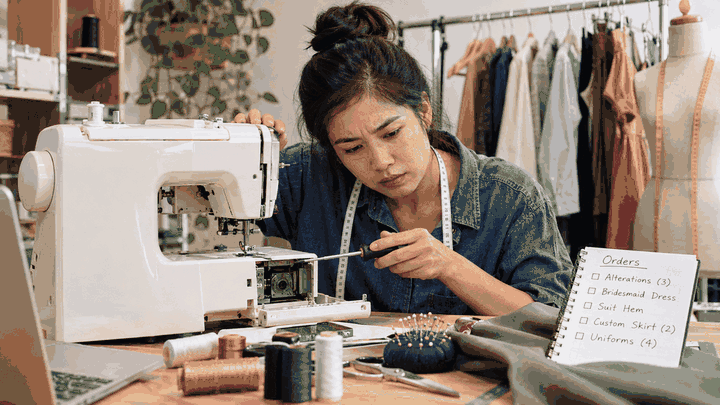
Ten Customer Orders and a Silent Sewing Machine: Keeping a Small Tailoring Studio Working
 A sewing machine may cost less than a commercial oven or delivery van, but for a small tailoring business it can be just as essential. A breakdown before a wedding alteration deadline or a busy market weekend can threaten both revenue and customer trust. Owners evaluating practical online borrowing research should first calculate what the repair truly requires, which orders are at risk, and whether temporary equipment could bridge the gap. The quickest replacement is not necessarily the choice that protects cash flow over the next six months.
Diagnose the machine before replacing it
A skipped stitch, broken thread, or jammed feed mechanism does not always mean the motor has failed. Stop using a machine that makes unusual electrical noises or shows signs of overheating, and seek qualified service when appropriate. Ask for a written diagnostic assessment that separates labour from required parts. Confirm whether a warranty, maintenance plan, or manufacturer support applies. If you own more than one machine, identify which tasks can safely continue with existing equipment. Do not risk damaging customer garments to meet an urgent deadline. Preserving workmanship and safety should take priority over avoiding a short pause in production.
Put your orders on a calendar
List every open order by due date, remaining work hours, promised price, deposit received, and materials already purchased. This reveals which projects are most urgent and which can be rescheduled with permission. Contact affected customers early, explain the delay accurately, and offer realistic alternatives instead of promising a repair date you do not control. If subcontracting to a trusted local tailor is possible, compare the cost with the potential loss of an order. A good customer relationship can survive a transparent inconvenience more easily than an unexplained missed deadline.
Compare three ways to restore production
A machine service, short-term rental, and replacement purchase have different costs and risks. For repair, consider the estimate, age of the equipment, availability of parts, and expected remaining useful life. For rental, include delivery, insurance, and compatibility with your regular materials. For replacement, compare used professional models and warranties rather than shopping only for new premium equipment. Check whether specialized attachments or needles will transfer to the replacement. A cheap machine that cannot handle thick fabric or long workdays may produce another delay almost immediately.
Keep working capital separate from equipment money
Small studios often have deposits in their bank account that are meant to cover fabric, zippers, buttons, and other materials required to complete customer work. Spending all of those funds on a machine can leave outstanding orders unfinished even after the repair is solved. Prepare a cash-flow forecast that separates customer deposits, expected final payments, supplier bills, rent, and personal withdrawals. Consider the time between completing work and actually receiving payment. A replacement that looks affordable against this month’s total revenue may still be too expensive against the cash available on the day the invoice is due.
Think carefully before taking a loan
Borrowing may make sense to evaluate when a documented repair or replacement is necessary to resume work, but it introduces a fixed obligation into earnings that can fluctuate. Compare interest, fees, term length, and total repayment. Use a conservative revenue estimate that excludes unconfirmed bookings. Ask whether a supplier offers a straightforward payment arrangement and whether a rental can buy time to save. Do not take extra money for studio decorations, promotional materials, or unrelated improvements merely because a larger loan is offered. The priority is restoring a reliable production process without putting essentials at risk.
Turn the breakdown into an equipment plan
After orders resume, create a maintenance schedule based on the machine manual and your workload. Set aside a modest share of each completed order for repairs and eventual replacement. Keep a list of reliable local technicians, common spare parts, and a backup production arrangement. Record recurring problems so a future service professional can identify patterns sooner. Where a machine is critical to income, an equipment reserve is not an optional luxury; it is part of operating sustainably.
Review what the downtime taught you
After the crisis passes, compare the initial quote, final cost, lost hours, and any rush-shipping or subcontracting charges. This post-mortem can guide whether to buy a spare machine later, change service intervals, or schedule a short maintenance break between busy periods. A small business becomes more resilient when it has a plan for interruptions that does not depend on accepting the first available credit offer.